2026 International Conference on Identification, Information and Knowledge in the Internet of Things (IIKI)
IIKI 2026 features invited lectures from leading scholars whose work spans finance, technology, political science, sociology, security studies, and the social consequences of artificial intelligence.
Roberto Renò holds a PhD in Financial Mathematics at Scuola Normale Superiore in Pisa, Italy, and a Degree in Physics at the University of Pisa.
He has been Visiting Professor at the Carey Business School at the Johns Hopkins University of Baltimore; Senior Fellow at Collegio Carlo Alberto, Turin; Fernand Braudel Fellow at the European University Institute in Florence; Visiting Professor at LUISS, Rome and IMT, Lucca; Professor at the University of Verona; Associate and Assistant Professor of Quantitative Finance at the University of Siena.
His professional activity includes consultancy in the fields of interest rate modelling, time series forecasting, portfolio allocation and hedge fund strategies.
His research focuses on various aspects of finance, with specific contributions in asset pricing, volatility modeling and forecasting, nonparametric statistics. He published more than 40 research papers on leading finance, economics, econometrics, mathematics and physics journals.
Keynote
Socio-political effects of advanced technologies
Talk Title
Socio-political effects of advanced technologies
Lecturer
Dr Ivana Luknar, Institute for Political Studies, Department for Political Theory, Belgrade, Serbia
Dr. Ivana Luknar, a sociologist and doctor of political sciences, focuses her research on the intersection of technology, social deviance, and security. She has extensively examined the socio-political consequences of artificial intelligence, including its ethical, legal, and gender dimensions. Her work addresses various forms of cyber threats, ranging from cybercrime to cyber terrorism, applying sociological frameworks such as social control theory.
She has contributed to the study of human trafficking, specifically minors sex trafficking, as well as police cooperation and organizational behavior within law enforcement. Her interdisciplinary approach bridges sociology, political science, criminology, security studies and technology.
Dr. Luknar has also explored themes of national identity, the geopolitical use of history, and the contributions of women in interwar Yugoslavia. Her scholarship combines theoretical analysis with policy-oriented recommendations, appearing in multiple languages across international conferences and academic journals.
Abstract
Contemporary humanity occupies a unique transitional position. Current generations are simultaneously the last to remain biologically unmodified, intellectually isolated, and physically constrained, as well as the first to undergo technological augmentation, achieve collective intellectual connectivity, and be limited only by imaginative capacity. This places humanity precisely at the singularity's event horizon. This tautological condition, balancing between before and after, has surprisingly escaped scholarly attention until now.
Future social trajectories are not predetermined. They depend entirely on contemporary dynamics. Everyday decisions and actions carry significant weight. They collectively shape the direction of human development. Present social forces, such as technological integration, policy choices, and cultural shifts, will determine which path society ultimately takes.
Thus, the current moment is both fragile and formative. This lecture addresses the importance of each individual. It invites each of us to ask how we wish to shape the future. Specifically, should we chase technological progress blindly? Should we regulate it reactively, filling gaps as they emerge? Or will we recognize the weight of the present moment?
Keynote
Sequential Recommendation under Noisy and Biased User Behaviors
Talk Title
Sequential Recommendation under Noisy and Biased User Behaviors
Lecturer
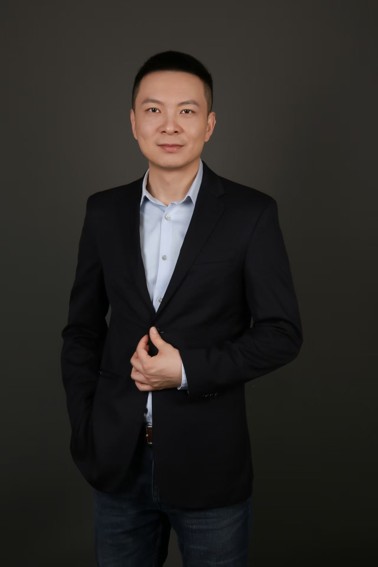
Xin Wang, Professor, School of Business Administration and Institute of Big Data Research, Southwestern University of Finance and Economics
Xin Wang is a Professor at the School of Business Administration and Institute of Big Data Research, Southwestern University of Finance and Economics. He received his bachelor’s degree from Tsinghua University, and his PhD in Operations Management from Carnegie Mellon University. From 2016 to 2024, he served on the faculty of the Department of Industrial Engineering and Decision Analytics at the Hong Kong University of Science and Technology. He joined Southwestern University of Finance and Economics in 2024 and has worked there ever since.
His research interests cover global supply chain management, technological innovation, and innovative operational models. Focusing on diverse risks and challenges confronting Chinese enterprises in international operations, his research takes a data-driven approach to optimize corporate competitive strategies from multiple dimensions, including corporate innovation, market expansion, and supply chain resilience enhancement.
His research outputs have won numerous honors, including the Second Prize of the Outstanding Scientific Research Achievement Award (Humanities and Social Sciences) issued by the Ministry of Education of the People’s Republic of China, the First Prize of the Outstanding Achievement Award in Philosophy and Social Sciences of Guangdong Province, the First Prize of the INFORMS Technology, Innovation Management and Entrepreneurship Section (TIMES) Best Working Paper Competition, as well as a nomination for the INFORMS MSOM Society’s Best Operations Management Paper in Management Science Award.
Abstract
Sequential recommender aims to infer users’ latent preferences from their historical interaction sequences for next-item recommendation. In real-world systems, however, logged interactions are often corrupted by both systematic bias and random noise. Although these distortions have been studied in isolation, how to jointly address them within a unified sequential recommender remains underexplored.
We revisit this problem through two lenses -- label distortion and history distortion -- and propose DARM, a Distortion-Aware Recommendation framework with a Mixture-of-Experts architecture to learn user preference robustly from biased and noisy sequences. To mitigate label distortion, DARM leverages synthetic and teacher-guided supervision to identify interactions affected by noise or bias, and selectively suppresses the corresponding signals to train distortion-robust experts.
To handle history distortion, DARM further introduces a sequence-aware gating network that dynamically routes each user history to the most suitable expert, effectively exploiting expert complementarity. Extensive experiments on multiple real-world datasets demonstrate that DARM consistently outperforms state-of-the-art sequential recommenders. Moreover, oracle upper-bound analyses reveal substantial room for improvement and highlight the importance of explicitly modeling multiple distortions in sequential recommendation.